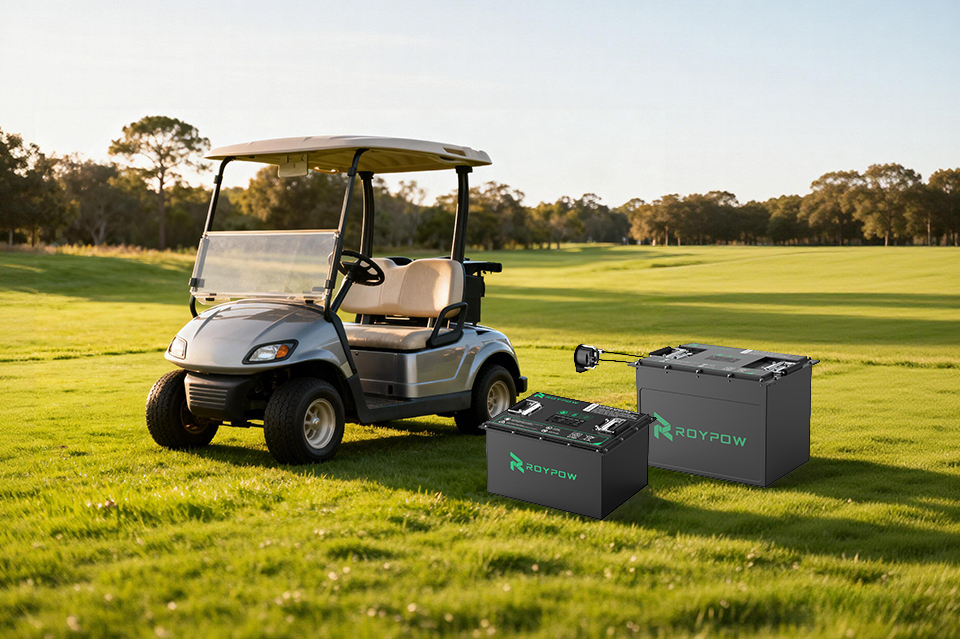
Fast Recommendation for EZGO TXT Lithium Upgrades

The best battery for an EZGO TXT is the lithium iron phosphate, or LiFePO4, pack that matches the cart’s original system voltage, physical battery bay, controller limits, charger profile, and real driving workload. For most owners, that means a 36V LiFePO4 pack for a 36V TXT and a 48V LiFePO4 pack for a 48V TXT, with enough amp-hour capacity to cover daily distance, hills, passengers, accessories, turf conditions, and reserve energy.
If you want a short buying answer: choose a purpose-built golf cart lithium kit from a manufacturer that provides an integrated BMS, matched charger, state-of-charge display, main cables, mounting hardware, documentation, technical support, and global warranty service. For everyday neighborhood, resort, campus, marina, and golf course use, many TXT owners choose around 60Ah to 105Ah. For long routes, hilly communities, utility work, rental fleets, or carts with rear seats and cargo boxes, a larger capacity may be the better investment.
Owners replacing flooded lead-acid batteries usually notice three immediate changes after a quality LiFePO4 upgrade: the cart becomes lighter, voltage stays more stable under load, and maintenance drops sharply because there is no watering, acid cleaning, corrosion management, or equalization routine. In busy global markets such as the United States, the United Kingdom, Australia, South Africa, the Middle East, Southeast Asia, and European resort regions, these benefits are why lithium conversion has become a mainstream TXT upgrade rather than a niche modification.
For a global world audience, the most important rule is not to buy by price alone. A battery that looks inexpensive can become costly if it has an undersized BMS, poor mounting design, no proper charger, weak after-sales support, or unclear certification. Start by confirming whether your TXT is 36V or 48V, then choose the amp-hour capacity according to your use case, then confirm the installation kit and charger. ROYPOW’s Golf Cart Batteries are designed as lithium replacements for lead-acid golf cart systems and are supported by in-house engineering, manufacturing, testing, and service teams.
| TXT User Type | Typical Voltage | Suggested Capacity Range | Best Fit | Key Buying Priority | Notes |
|---|---|---|---|---|---|
| Casual golf course user | 36V or 48V | 60Ah to 80Ah | Standard LiFePO4 kit | Reliable range | Ideal for one or two rounds depending on terrain and load. |
| Neighborhood driver | 48V often preferred | 80Ah to 105Ah | Integrated lithium pack | Daily convenience | Useful for gated communities and short urban mobility. |
| Resort or hotel fleet | 48V | 105Ah or higher | Fleet-ready kit | Low downtime | Fast charging and service support matter more than lowest price. |
| Hilly property owner | 48V | 100Ah or higher | High-discharge BMS pack | Torque stability | Check controller and motor condition before conversion. |
| Utility cart user | 48V | 105Ah to 160Ah | Heavy-duty lithium system | Load handling | Rear seats, tools, sprayers, and cargo increase energy demand. |
| Rental operator | 48V | 100Ah or higher | Telematics-ready battery | Fleet visibility | Battery monitoring helps manage charging and user behavior. |
This table shows why there is no single universal amp-hour number. The “best” EZGO TXT battery depends on how the cart is used, where it operates, and how much reserve range the owner wants at the end of the day.
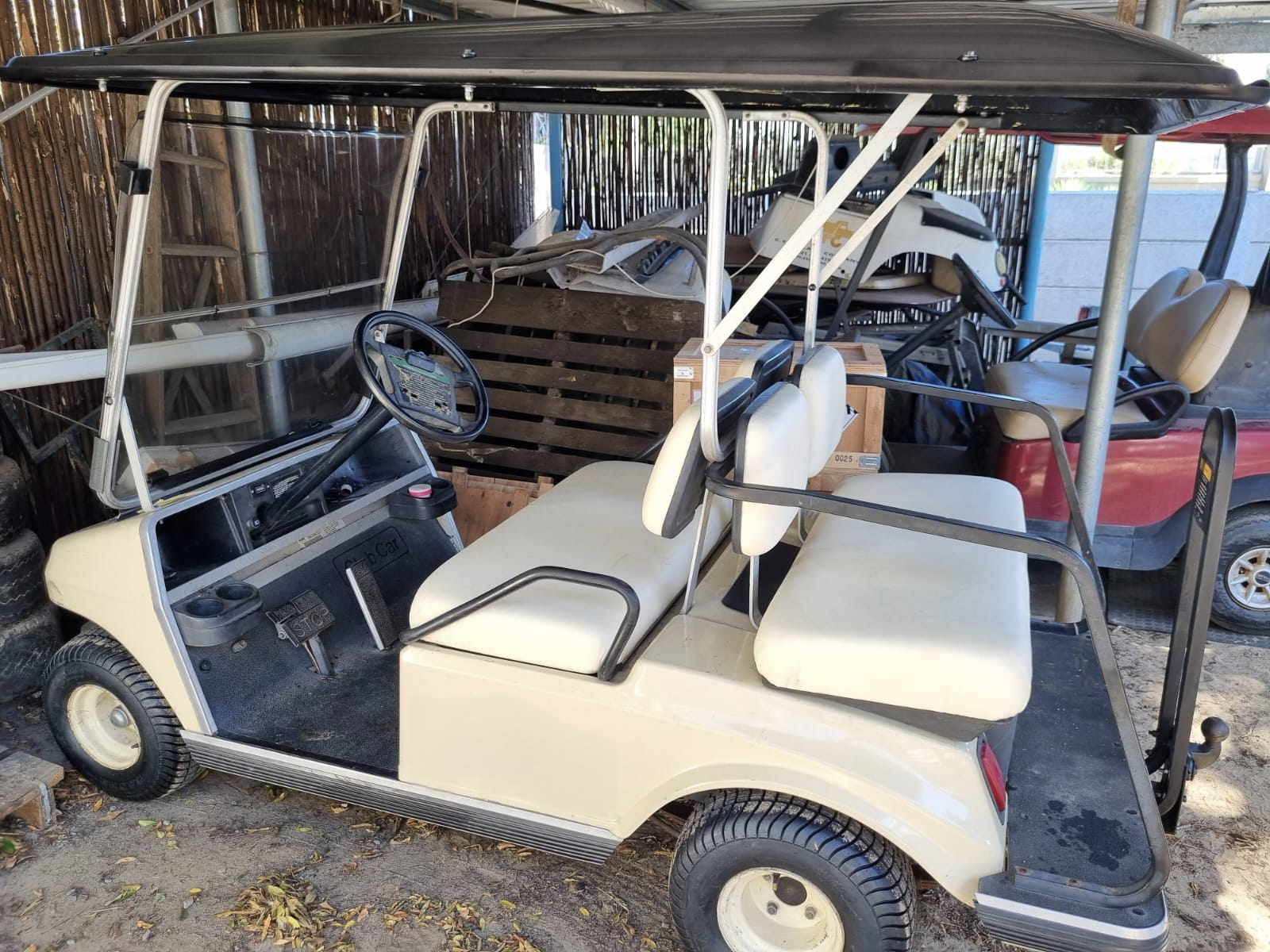
How to Confirm Whether Your EZGO TXT Is 36V or 48V

Before ordering a lithium conversion kit, confirm the voltage of your EZGO TXT. Installing the wrong voltage is not a small mismatch; it can damage the controller, solenoid, charger, motor, accessories, or battery system. TXT models have been produced in both 36V and 48V configurations, so year alone is not always enough, especially when buying a used cart in markets where carts move between golf courses, dealers, ports, auctions, resorts, and private communities.
The easiest field method is to inspect the existing lead-acid battery bank. A traditional 36V TXT commonly uses six 6V batteries wired in series. A traditional 48V TXT may use six 8V batteries, four 12V batteries, or other arrangements depending on model history and prior owner modifications. Count the batteries and read the voltage label on each battery case. Multiply the individual battery voltage by the number of batteries in series. For example, six 6V batteries equal 36V, while six 8V batteries equal 48V.
You can also inspect the charger label. A 36V charger will usually be marked for 36V output, while a 48V charger will be marked for 48V. However, do not rely only on the charger if the cart was purchased secondhand, because the charger may have been replaced or mismatched. In ports and trade hubs such as Los Angeles, Houston, Rotterdam, Singapore, Dubai, Durban, Sydney, Hamburg, and Felixstowe, used golf carts often pass through several owners before reaching the final buyer. Documentation may be incomplete.
The controller and solenoid labels are another useful clue. Many TXT controllers show operating voltage on a manufacturer sticker. If the cart has been modified with a performance controller, verify the full system rather than assuming factory configuration. A digital multimeter can also confirm pack voltage. With proper safety precautions, measure across the main pack positive and negative terminals. A fully charged 36V lead-acid pack may read around 38V, and a fully charged 48V lead-acid pack may read around 50V or more. Lithium resting voltage differs, so use this step only for identifying the existing pack before conversion.
| Identification Method | 36V TXT Clue | 48V TXT Clue | Reliability | Common Mistake | Recommended Action |
|---|---|---|---|---|---|
| Battery count and labels | Six 6V batteries | Six 8V or four 12V batteries | High | Counting batteries without reading voltage | Read each battery label clearly. |
| Charger label | 36V output marking | 48V output marking | Medium | Assuming charger is original | Cross-check with battery bank. |
| Controller sticker | 36V controller rating | 48V controller rating | High if original | Ignoring aftermarket controllers | Check part number and rating. |
| Solenoid rating | 36V solenoid | 48V solenoid | Medium | Using solenoid alone as proof | Confirm with pack voltage. |
| Multimeter test | About 36V nominal | About 48V nominal | High | Measuring wrong terminals | Use safe meter procedure. |
| Serial/model documentation | May indicate factory setup | May indicate factory setup | Medium | Trusting old paperwork after upgrades | Use as supporting evidence only. |
The safest approach is to combine at least two or three identification methods. If your cart is a 36V model, review lithium options such as 36V Golf Cart Batteries. If it is a 48V TXT, review 48V Golf Cart Batteries. High-performance or custom projects may use other architectures, but standard TXT upgrades should preserve the correct voltage unless a qualified technician is completing a full system conversion.
Selecting the Right Ah Capacity for Your TXT Driving Needs

Amp-hour capacity is one of the most misunderstood specifications in golf cart batteries. Voltage tells you system compatibility; amp-hours help estimate usable energy and range. A higher Ah rating generally means more energy storage, but the real-world result depends on speed, tire size, passenger weight, terrain, wind, temperature, stop-and-go driving, controller efficiency, motor condition, and accessory loads such as lights, fans, audio systems, refrigerators, GPS screens, sprayers, or USB charging stations.
Lead-acid batteries suffer from voltage sag and reduced usable capacity under heavy load. LiFePO4 batteries usually deliver a flatter voltage curve and higher usable capacity, so a lithium pack with fewer nominal amp-hours can sometimes outperform a larger lead-acid bank in practical driving. This is one reason TXT owners often feel that their cart has more consistent power after conversion, especially on the back nine of a golf course, on a long resort path, or climbing repeated hills in a private community.
For a light-duty TXT used on flat terrain, a 60Ah lithium pack can be enough. For mixed use with two to four passengers, 80Ah to 105Ah is a stronger range. For hill climbing, utility applications, commercial hospitality, security patrols, maintenance crews, farms, vineyards, campuses, marinas, and rental fleets, larger capacity and higher discharge capability are worth considering. The goal is not only to finish the route; it is to finish with reserve energy so the battery is not stressed and the cart is ready for the next task.
Global climate also matters. In hot regions such as the Gulf, northern Australia, southern Spain, Arizona, and parts of Africa, battery thermal design and BMS protection are important. In cooler markets such as Canada, northern Europe, Korea, Japan, and mountainous areas, low-temperature charge protection is important because lithium batteries should not be charged below specified limits unless the system is designed for it. A quality BMS helps protect against overcharge, over-discharge, short circuit, excessive current, and temperature extremes.
| Driving Condition | Energy Demand | Suggested Ah Direction | Performance Concern | Best Practice | Buyer Tip |
|---|---|---|---|---|---|
| Flat golf course | Low to moderate | Standard capacity | Round completion | Keep reserve after play | Do not size only for perfect weather. |
| Gated community | Moderate | Medium capacity | Daily errands | Charge on a routine schedule | Consider lights and audio load. |
| Hilly resort | High | Higher capacity | Voltage stability | Choose strong BMS discharge rating | Verify controller compatibility. |
| Four-passenger cart | Moderate to high | Medium to high | Extra weight | Account for rear seat passengers | Do not compare to a two-seat cart. |
| Maintenance cart | High | High capacity | Tools and cargo | Use fleet charging procedure | Ask for commercial support. |
| Rental fleet | Variable | High reserve capacity | User unpredictability | Monitor charge status daily | Value warranty and diagnostics. |
This buying logic applies across global world markets, whether the TXT is used near a Florida retirement community, a Dubai resort, a Cape Town wine estate, a Singapore logistics campus, a Queensland holiday park, or a Mediterranean marina. The more unpredictable the use, the more valuable reserve capacity becomes.
Samsung ELiTE OEM and Aftermarket Lithium: Which Is Better for Your TXT?
EZGO has offered factory lithium options in some product lines, including OEM systems associated with recognized cell brands. OEM lithium can be attractive because it is designed around the cart platform, supported through the original equipment channel, and may maintain a clean factory-style configuration. For buyers purchasing a newer cart, an OEM lithium system can be convenient and consistent.
Aftermarket lithium, however, is often the preferred route for owners upgrading an existing EZGO TXT that originally came with lead-acid batteries. A strong aftermarket kit can provide modern LiFePO4 chemistry, a higher capacity option, integrated BMS protection, a matched charger, mounting hardware, Bluetooth or display-based monitoring, and flexible service through dealers. The aftermarket route can also be more practical when the owner wants to extend the life of an older but mechanically sound cart rather than buying a new vehicle.
The comparison should not be framed as OEM always better or aftermarket always cheaper. It should be framed around engineering quality, safety, installation completeness, warranty, support, and total cost of ownership. A poorly designed aftermarket pack is a risk; a well-engineered aftermarket pack from a lithium specialist can be an excellent upgrade. Likewise, an OEM solution may be ideal for a new cart but less accessible or less cost-effective for an older TXT conversion.
When comparing Samsung ELiTE OEM-style systems and aftermarket LiFePO4 packs, pay attention to chemistry, usable capacity, BMS current rating, charger compatibility, communication features, installation requirements, parts availability, and dealer support. Ask whether the battery is designed specifically for golf carts or whether it is a generic battery placed into a golf cart application. Golf carts experience vibration, high current acceleration, outdoor storage, repeated partial charging, and uneven terrain, so application-specific design matters.
| Comparison Point | OEM Lithium | Quality Aftermarket LiFePO4 | Risk Area | Best For | Decision Tip |
|---|---|---|---|---|---|
| Platform integration | Factory aligned | Kit dependent | Poor fit in cheap kits | Newer carts | Check exact TXT compatibility. |
| Capacity choice | May be limited | Often broader | Oversizing without need | Custom range needs | Match Ah to route demands. |
| Service channel | OEM dealer network | Manufacturer and dealer network | Unknown sellers | Owners needing support | Buy from established suppliers. |
| Cost flexibility | Often premium | Varies widely | False economy | Conversions | Compare total installed cost. |
| Charger matching | Usually included | Should be included | Wrong charge profile | All lithium systems | Never use a lead-acid charger unless approved. |
| Monitoring | Factory dependent | Display or app options | No diagnostics | Fleet and heavy users | Choose visible state-of-charge data. |
For many TXT owners, a premium aftermarket LiFePO4 kit offers the best balance of performance, availability, and upgrade flexibility. The key is to buy from a company with battery-specific engineering rather than from an unknown seller offering a box of cells without system-level support.
What a Complete TXT Battery Upgrade Kit Should Include
A proper EZGO TXT lithium conversion kit should be more than a battery. It should be a coordinated system. At minimum, it should include the lithium battery pack or packs, a BMS designed for golf cart current demands, main power cables, installation hardware, mounting brackets or tray components where required, a lithium-compatible charger, a state-of-charge meter or display, clear wiring instructions, safety documentation, warranty terms, and access to technical support.
The BMS is the control and protection center of the lithium pack. It monitors voltage, current, temperature, and cell balance. A golf cart BMS must tolerate acceleration current, hill-climbing load, regenerative or controller-related electrical behavior where applicable, and repeated partial charge cycles. If the BMS is undersized, the cart may shut down during acceleration or on hills. If protection logic is weak, safety and longevity can suffer.
Mounting hardware is also important. Lead-acid battery banks use multiple heavy blocks that sit in the tray. A lithium pack is lighter and may have different dimensions, so it must be secured properly to handle vibration, bumps, braking, transport, and uneven paths. A loose battery is not acceptable. High-quality kits address this with brackets, straps, trays, or clear mounting guidance. For commercial fleets, consistent mounting also reduces service time and inspection errors.
The charger should be matched to the lithium chemistry and voltage. A lithium charger uses a charge profile designed for LiFePO4. It should have the correct output voltage, current, connector, safety certification, and operating environment rating. Some kits include onboard chargers; others use portable chargers. In either case, the charger should come from the battery supplier or be explicitly approved by the battery manufacturer. You can review a purpose-built Golf Cart Battery Charger when planning a full system conversion.
| Kit Component | Purpose | Why It Matters | Common Problem If Missing | Quality Indicator | Buyer Question |
|---|---|---|---|---|---|
| LiFePO4 battery pack | Energy storage | Defines voltage and range | Wrong fit or low capacity | Golf-cart-specific design | Is it approved for EZGO TXT? |
| BMS | Protection and control | Prevents unsafe operation | Shutdown under load | High current rating | What are continuous and peak ratings? |
| Lithium charger | Correct charging | Protects battery life | Overcharge or incomplete charge | Matched charge profile | Is it included or approved? |
| State-of-charge display | Energy visibility | Prevents range anxiety | Guessing remaining power | Accurate lithium calibration | Is it plug-and-play? |
| Cables and connectors | Power transfer | Handles high current | Heat and voltage drop | Proper gauge and terminals | Are cables included? |
| Mounting hardware | Physical security | Controls vibration | Loose battery movement | TXT-specific bracket or tray | How is the pack secured? |
A complete kit saves time and reduces installation risk. It also makes support easier because the supplier understands the full system rather than blaming a third-party charger, cable, display, or connector.
TXT Installation Details: Battery Tray, Cables, and Mounting
EZGO TXT installation should begin with safety. Turn the key off, put the cart in tow or maintenance mode if applicable, disconnect the main pack negative, remove jewelry, use insulated tools, and follow the service manual. Lead-acid batteries are heavy and contain acid, so removal should be handled carefully. In professional workshops from Atlanta to Birmingham, from Perth to Auckland, and from Johannesburg to Nairobi, technicians often use lifting aids and neutralizing supplies to manage old batteries safely.
After removing the lead-acid batteries, inspect the tray. Corrosion is common in older TXT carts because acid vapor and spills attack metal surfaces. Clean, neutralize, repair, and paint the tray if needed before installing lithium. A lithium battery is a long-term component, and it should not be mounted onto a weak or rusted structure. Also inspect hold-down points, frame condition, cable routing, and the surrounding harness.
Cable sizing is critical. Golf carts draw high current during acceleration and climbing. Undersized cables can heat up, reduce performance, and create safety risks. Use cables supplied in the kit or cables that meet the battery and controller current requirements. Keep cable runs tidy, avoid sharp edges, protect against abrasion, and torque terminals according to the manufacturer’s specification. Loose connections can cause heat, arcing, voltage drop, and intermittent faults.
The state-of-charge meter or display should be installed where the driver can see it easily. Lithium voltage remains relatively flat during discharge, so old lead-acid-style meters may not read accurately. A lithium-compatible display, Bluetooth app, or CAN-connected monitoring system gives more reliable information. Fleet operators should consider monitoring that helps staff identify undercharged carts before dispatch.
Installation complexity varies by kit. Some modern lithium packs are designed as drop-in-ready replacements, while others require tray adapters or cable changes. If you are not comfortable with electrical work, use a qualified dealer or technician. This is especially important in commercial settings such as resorts, airports, campuses, industrial parks, ports, theme parks, and municipal fleets where uptime and liability matter.
Matching the Charger for EZGO TXT Lithium Conversions
Charger matching is one of the most important steps in a lithium conversion. Lead-acid chargers and LiFePO4 chargers use different charging logic. A charger designed for flooded lead-acid batteries may include equalization or float behavior that is not appropriate for lithium. Some chargers can be reprogrammed, but many cannot. Unless the battery manufacturer specifically approves the charger and profile, use the lithium charger supplied or recommended with the battery.
A correct charger should match voltage first. A 36V lithium battery requires a charger designed for that lithium system voltage. A 48V lithium battery requires the proper 48V lithium charger. The connector must also match the cart or conversion design, and the output current should suit the battery capacity and desired charging time. A very small charger may take too long for commercial use; an excessively large charger may be inappropriate if not approved by the battery manufacturer.
Charging location matters in the global world market. In humid coastal locations such as Miami, Singapore, Durban, Manila, and coastal Brazil, connectors and chargers should be protected from water and corrosion. In hot regions, ventilation and shade matter. In cold regions, low-temperature charging rules matter. Indoor charging areas should follow local electrical codes, and commercial fleet charging stations should be organized to prevent cable damage and tripping hazards.
Future charging trends for 2026 and beyond include smarter chargers, better battery-to-charger communication, app-based diagnostics, energy management for fleets, solar-assisted charging at resorts, and grid-aware charging for properties with high electricity demand. As sustainability policies tighten in many markets, golf courses, hotels, campuses, and municipalities are looking for electric mobility systems that reduce maintenance, emissions, and energy waste. Lithium batteries fit this direction when paired with efficient chargers and responsible recycling channels.
Range, Speed, and Hill-Climbing After a TXT Lithium Upgrade
A lithium upgrade can improve the driving feel of an EZGO TXT, but it is important to set accurate expectations. A battery does not automatically turn a standard cart into a high-speed performance vehicle. Speed is influenced by the motor, controller, tire size, gearing, software settings, terrain, and local regulations. What lithium usually improves most clearly is consistency: the cart maintains voltage better, accelerates more predictably, and feels less tired as the battery discharges.
Range depends mainly on usable energy and driving conditions. A light cart on flat paths at moderate speed will travel farther than a lifted cart with large tires, four passengers, cargo, and hills. Large tires can increase load on the motor and controller. Rear seats and utility boxes add weight. Aggressive acceleration consumes energy quickly. Soft turf, sand, gravel, and wet ground increase rolling resistance. Therefore, advertised range should be treated as an estimate, not a guarantee.
Hill-climbing performance often improves because lithium voltage sag is lower than lead-acid voltage sag. The cart may feel stronger on slopes, especially near the end of the charge cycle. However, if the motor, controller, solenoid, or cables are weak, lithium may expose those limitations. Before expecting major hill gains, make sure the drivetrain is healthy. In hilly cities and resort regions such as San Francisco suburbs, Cape Town estates, Madeira, Mallorca, Queenstown, and parts of the Swiss and Austrian Alps, professional inspection is wise before conversion.
Weight reduction is another benefit. Replacing a heavy lead-acid bank with lithium can remove significant mass. Less weight can support better efficiency, braking feel, tire wear, and handling. For golf courses, reduced weight may also help reduce turf impact. For fleets, lower maintenance and faster turnaround can matter more than top speed. A security patrol cart or resort shuttle that is ready every morning is more valuable than one that is fast but unreliable.
Some advanced projects may consider higher-voltage platforms, especially outside standard TXT replacement work. For example, modern high-performance golf cart and low-speed electric vehicle designs may use architectures beyond 48V. ROYPOW also provides 72V Golf Cart Batteries for suitable applications, but a standard EZGO TXT owner should not install a different system voltage unless completing a full engineered conversion with compatible controller, motor, wiring, charger, and safety design.
About Our Company
ROYPOW TECHNOLOGY is a global lithium battery systems and energy storage solutions company focused on research, development, manufacturing, and sales. With more than 20 years of experience in new energy solutions, ROYPOW specializes in lithium-ion replacements for lead-acid batteries and does not manufacture lead-acid products. This focus is important for EZGO TXT owners because lithium conversions require battery system expertise, not simply battery box assembly.
Technological capabilities are central to ROYPOW’s value. The company maintains in-house research and development across BMS design, battery pack design, system design, industrial design, inverter design, and software development. More than 200 R&D professionals support product development, testing, and optimization. For golf cart applications, this means the battery is considered as a complete system: cells, BMS, enclosure, charger compatibility, communication, thermal behavior, vibration resistance, and user experience.
Manufacturing capabilities also matter. ROYPOW has manufacturing bases in China and Indonesia, a large headquarters facility, advanced MES systems, automated production lines, and quality systems including IATF16949. Its testing center includes high-precision equipment for cell testing, battery system testing, BMS testing, charger testing, energy storage testing, and hybrid inverter testing. This infrastructure helps create consistent products for global markets where carts operate in very different climates and workloads.
Service capabilities complete the picture. ROYPOW serves global customers through subsidiaries and regional support in markets including the United States, Brazil, the United Kingdom, Germany, the Netherlands, South Africa, Iraq, Australia, Japan, and Korea, along with an extensive dealer network. The company emphasizes quick response and fast resolution, which is valuable for golf courses, resorts, campuses, dealers, and fleets that cannot afford long downtime. Its product portfolio includes golf cart lithium batteries, industrial motive power batteries, energy storage systems, chargers, DC-DC converters, alternators, and complementary electric solutions.
For customers comparing suppliers, the practical question is simple: can the company support the entire life cycle of the battery? That includes design, production, testing, shipping, installation guidance, monitoring, warranty, technical support, and after-sales service. ROYPOW’s lithium-focused approach is designed to provide that one-stop support. Customers can also compare market options from regional distributors and online suppliers, including Golf Cart Batteries, but should always verify compatibility, warranty, and service terms before purchase.
FAQ
What is the best battery type for an EZGO TXT in 2026?
For most owners, LiFePO4 is the best upgrade chemistry because it offers long cycle life, stable voltage, reduced weight, low maintenance, and strong safety characteristics compared with traditional flooded lead-acid batteries. The best specific pack is the one that matches your TXT voltage, driving range, current demand, charger, and mounting requirements.
How do I know if my EZGO TXT is 36V or 48V?
Check the existing battery bank, charger label, controller rating, solenoid rating, and pack voltage with a multimeter. Six 6V lead-acid batteries usually indicate 36V. Six 8V batteries or four 12V batteries usually indicate 48V. Because used carts may have been modified, confirm with more than one method.
Can I put a 48V lithium battery in a 36V EZGO TXT?
Not as a simple battery replacement. A 36V TXT is designed around 36V components. Moving to 48V requires an engineered conversion that may include controller, solenoid, charger, wiring, and possibly motor changes. If you only want a battery replacement, use a 36V lithium system.
Can I use my old lead-acid charger with a lithium battery?
Usually no. Lithium batteries need a compatible lithium charge profile. Some chargers can be reprogrammed, but many cannot. Use the charger supplied or approved by the battery manufacturer to protect performance, safety, and warranty.
How many amp-hours do I need for an EZGO TXT?
Light users may be satisfied with around 60Ah to 80Ah, while neighborhood, resort, hilly, utility, and fleet users often benefit from 100Ah or more. Choose capacity based on passengers, terrain, distance, accessories, climate, and desired reserve energy.
Will lithium make my EZGO TXT faster?
Lithium may improve acceleration feel and maintain power better as the battery discharges, but top speed is controlled by the motor, controller, gearing, tires, software, and regulations. Do not rely on a battery alone for speed upgrades.
Is a single lithium pack better than multiple lithium batteries?
A single integrated pack can simplify installation, monitoring, balancing, and service. Multiple packs can work when designed correctly, but they must be properly matched and managed. For TXT conversions, many owners prefer an integrated golf-cart-specific lithium kit.
What should I inspect before installing lithium?
Inspect the battery tray, frame, cables, terminals, controller, solenoid, charger receptacle, accessory wiring, and tire size. Clean corrosion from lead-acid use and repair damaged mounting points before installing the new battery.
Are lithium golf cart batteries suitable for commercial fleets?
Yes, when properly selected. Resorts, golf courses, campuses, factories, ports, marinas, hotels, and security teams often choose lithium to reduce maintenance and downtime. Fleet buyers should prioritize warranty, diagnostics, charger management, and local service support.
What trends will shape EZGO TXT lithium upgrades after 2026?
Expect smarter BMS systems, connected diagnostics, improved charger communication, more sustainable recycling channels, stricter safety standards, solar-assisted fleet charging, and stronger demand from low-emission mobility policies in cities, resorts, campuses, and industrial sites worldwide.